














How to Sharpen Your Knife
How to Sharpen and Hone Your Knives at Home
The right kitchen knives for the job
A blunt knife has no place in the kitchen. With increased risk of slipping, a blunt blade can be much more dangerous than a sharp one. Sharpening is therefore essential when you work with knives to keep your knives precise and reduce the risk of accident. Our experts are on hand with tips and advice – find out everything you need to know about when and how to sharpen your knife, and which is the right sharpening tool for you.
The most important thing is to take care: sharpening knives can be dangerous and even experienced sharpeners should proceed with caution at all times.
How to Know if Your Knife Needs Sharpening
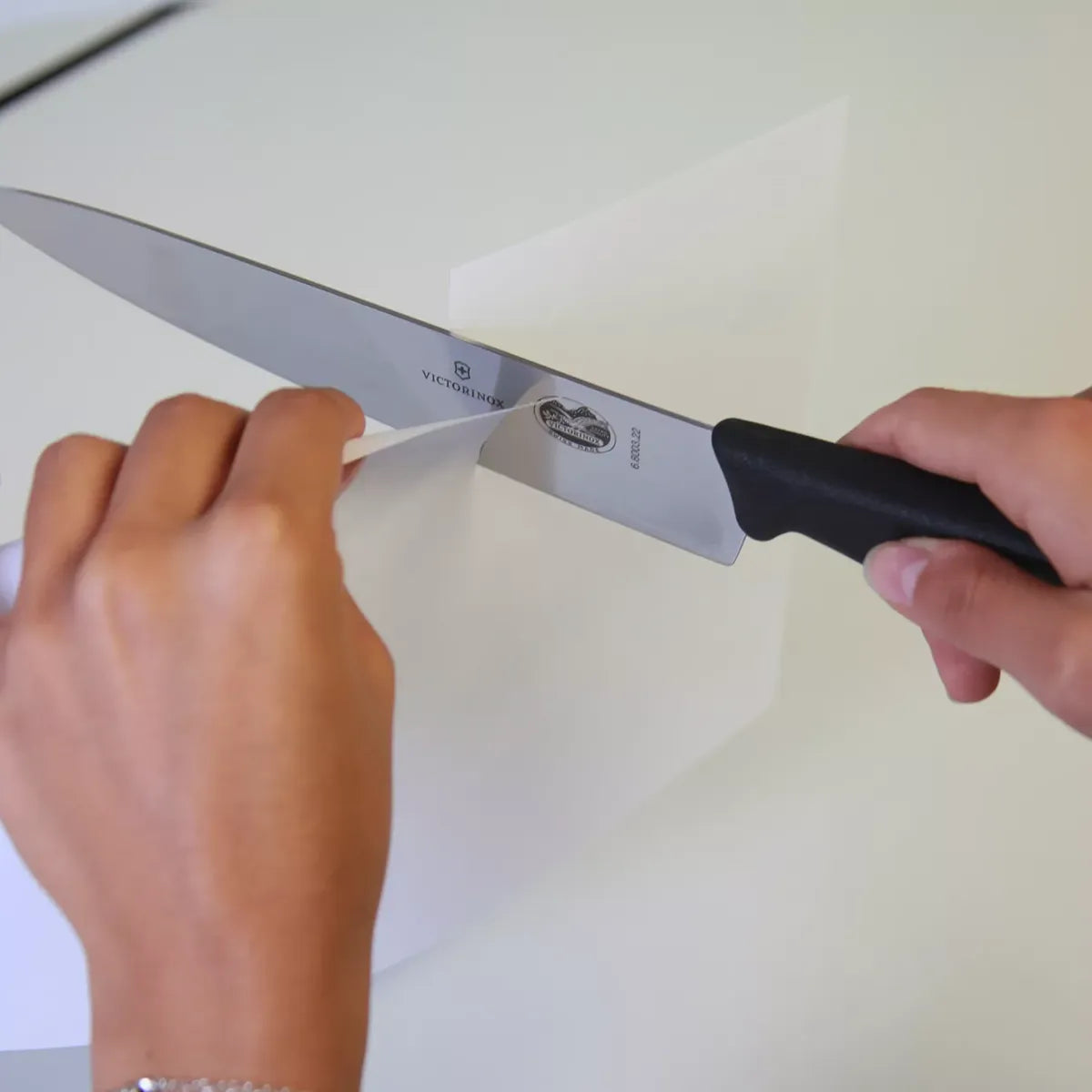
There are a couple of ways to see if your blade needs sharpening. One is the paper test – simply hold up a piece of paper with one hand and slice through it with the blade with the other hand. A sharp blade will cut effortlessly through the paper. Another way is slicing a tomato – if your knives struggle to cut into the thin skin and soft flesh of a tomato, they probably also need to be sharpened.
Otherwise, let frequency be your guide. For normal home cooking, we recommend you sharpen your knife after every 30-40 uses. Some pros prefer to sharpen their blades before every new culinary project.
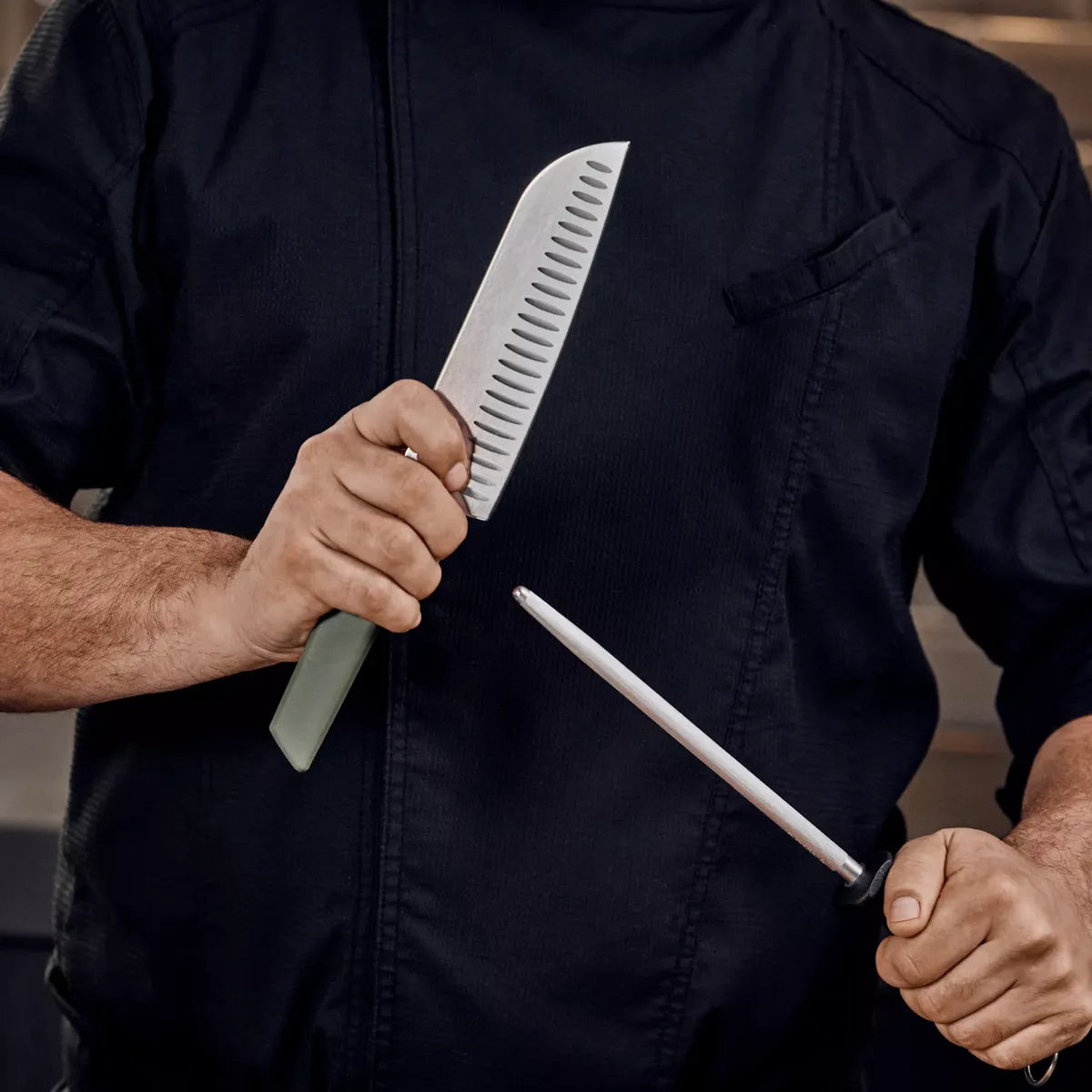
The Difference Between Honing and Sharpening
There are actually two processes involved in knife maintenance – sharpening and honing. What’s commonly referred to as sharpening is actually honing. Any blade can become dull – which essentially means its fine edge has become bent through use – and needs to be honed regularly. Honing lines the edge of the knife back up, reestablishing the full effect of its razor’s edge. You can do this yourself at home with a honing steel.
Sharpening, on the other hand, is a process where bits of the blade are ground and shaved off to produce a new, sharp edge. This can be done using a knife sharpener or an electric sharpener. And you don’t need to do it as frequently as honing – just a few times a year, or after every 300 uses or so. But don’t forget to always use the honing steel after sharpening! This is because sharpening removes material from the blade and then honing smooths the newly sharp edge, so it should always be done in this order.
With years of use and resharpening, the cutting edge of a knife blade will become thicker, making the resharpening process more difficult. In this case, we recommend a professional sharpening service. Our stores also offer this service for anyone who doesn’t feel like honing and sharpening their knives themselves.
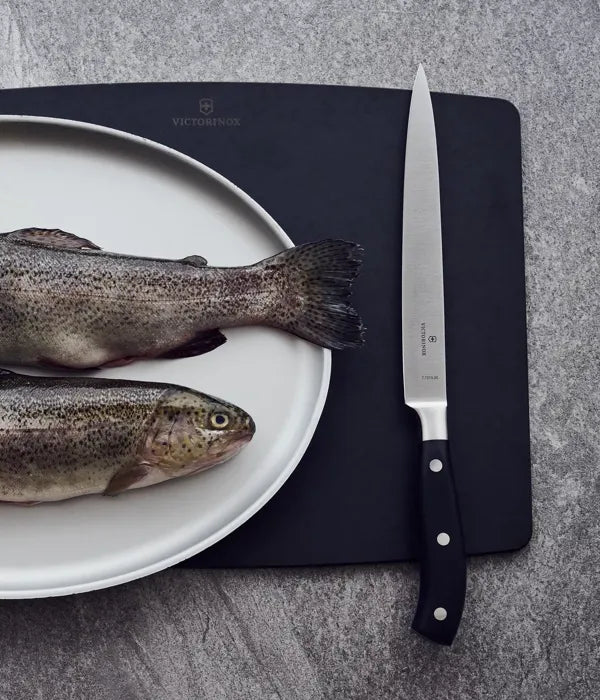
Step-by-Step Instructions for Knife Sharpening
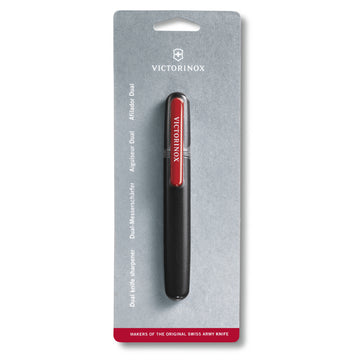
- Take your knife sharpener and place the blade inside. Pull the knife towards you five times with pressure and five times without pressure.
- Next, use the honing steel. If you are not experienced at using a honing steel, it’s best to place the tip on a folded tea towel or damp dish cloth for extra stability. Experienced users will be accustomed to holding the steel in mid-air.
- Hold the blade at a 20° angle to the honing steel.
- Pull the knife downwards and towards you, moving from the heel to the tip of the blade.
- Repeat five times on each side of the blade.
Which Sharpening Tool to Use
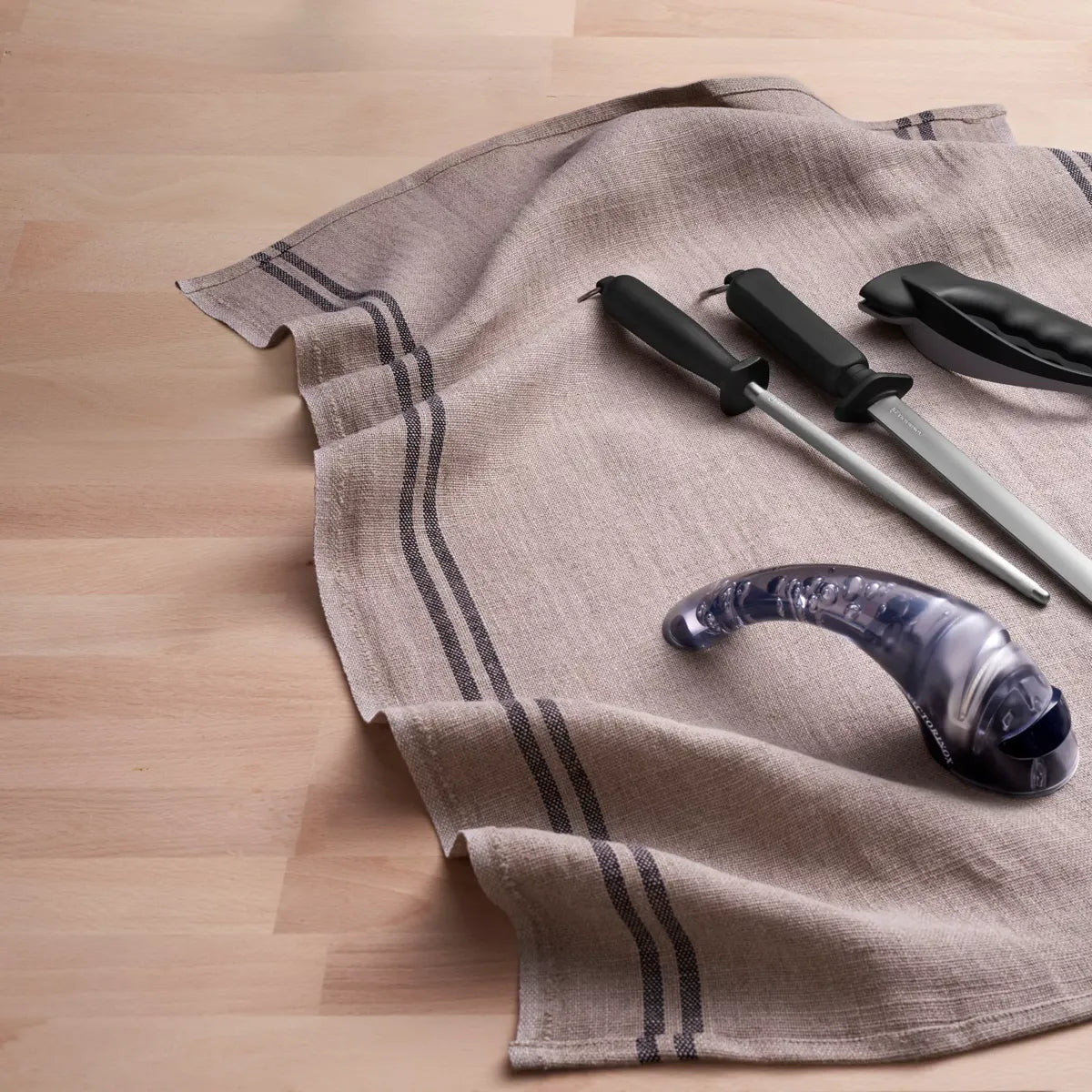
We offer a variety of sharpening and honing tools, so how do you know which one is the right one for you? First, you need to understand the difference between honing and sharpening, so you can choose your tools accordingly. A combination of both honing and sharpening tools should be part of your kitchen equipment, even if you will only use the sharpening tools two or three times a year.
You should also choose the honing tool that’s best for your knife. Stamped knives are made of steel with a slightly lower level of hardness that makes honing easier, so it can be done with a domestic honing steel. The harder steel of a forged knife means you don’t have to sharpen it as often, but you’ll need a diamond or ceramic honing steel to do the job – because its level of hardness has to be significantly higher than that of the blade itself.
Smaller kitchen knives can also be easily sharpened with our Sharpy tool. Larger wavy edge blades like bread knives should be sharpened by professionals, but if you’re an experienced sharpener, you can also use the Sharpy for smaller wavy edged blades. For most people however, we recommend a professional knife service for all wavy edged blades.
Now that you’ve sharpened your knives, click here to see our tips on caring for them so that they’ll stay that way as long as possible.